
Everything seems normal… but you need to stop faster than usual.
That's when you notice that the brake response is slower or the car needs more distance than you're used to. The problem is that this weakness often doesn't start suddenly but rather appears with subtle signs like a slight noise, a vibration, or a change in pedal feel. And here comes the important question: What are brake pads? And how does such a small part affect braking power and car stability when stopping?
what are brake pads and how do they control braking force?

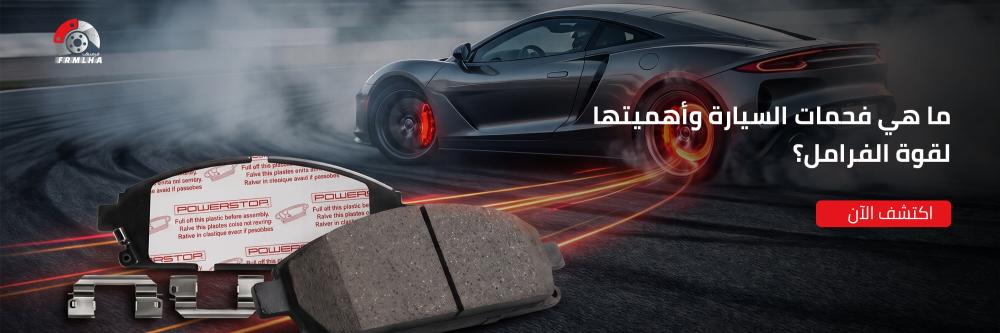
Car brake pads are the components that press against the brake disc when the pedal is pressed, creating friction that reduces wheel rotation until the car comes to a stop. Despite their small size, they withstand high pressure and heat every time the brakes are used. Therefore, the better material and the better the condition of the pads, the faster and more consistent the braking response. However, if they begin to wear out, you may notice a gradual weakening of braking force or unusual noises. This illustrates why brake pads are an essential part of braking power, not just a part that wears out and needs to be replaced.
Why are car brake pads important for braking power?
Once you understand what are brake pads, you'll realize their role isn't limited to slowing down the car. They're directly linked to your safety and braking stability when needed Their importance lies in the fact that they:
- Help the car stop smoothly and within the expected distance.
- Maintain brake response during traffic jams or sudden stops.
- Support the heat generated by repeated braking.
- Protect the brake disc from direct metal-to-metal friction and damage.
Despite these important roles, the effectiveness of brake pads depends on their compatibility with the car and its usage.
What truly determines the efficiency of car brake pads?

Not every new brake pad provides the same stopping power because its efficiency depends on its compatibility with the vehicle's weight, how it's used, and the condition of the braking system. A pad suitable for daily driving might not withstand the heat generated by a heavy vehicle or frequent use on inclines. The condition of the brake disc and caliper also makes a difference, as scratches or uneven pressure distribution reduce stopping power and cause uneven pad wear.
If you're wondering what are brake pads truly suitable for your car, the answer isn't just about size or price, but also about their compatibility with your vehicle and the condition of the disc and caliper before installation and during use. Any decrease in pad efficiency will begin to show clear signs that you should pay attention to early on.
What are the signs that your car's brake pads are starting to wear out?
Now that you know what are brake pads, it's important to pay attention to the signs that reveal their early wear…
- Frequent squealing when braking.
- The sound turning into a loud metallic grinding noise.
- Increased stopping distance.
- The need to press the brake pedal harder.
- Steering wheel vibration when braking.
- Car pulling to one side or the other, which may indicate uneven wear or a problem with the caliper.
- The brake pad warning light illuminating, meaning they have reached a stage where they need inspection or replacement.
- A smell of heat after frequent braking.
If you ignore these signs, the damage won't remain limited to the brake pads; it will begin to spread to other parts of the braking system.
When does brake pad wear become a bigger problem?
After learning what are brake pads, you need to know that delaying their replacement allows the damage from a simple consumable part to more expensive components in the braking system. As the friction layer wears down, pressure and heat begin to affect the brake disc, potentially requiring repair or replacement instead of just pad replacement. With continued use, repair costs increase and maintenance time increases. Therefore, addressing wear early protects the braking system and saves you from more extensive repairs. To prevent damage from worsening, the first step is to choose brake pads compatible with your car from the very beginning.
How can you ensure you choose the right brake pads for your car the first time?

To understand what are brake pads and determine which type suits your model, focus on these points before comparing prices or types:
Make sure they are compatible with your car
Because a single car model can come with more than one braking system, match the pad to the year of manufacture, trim level, or chassis number before ordering.
Choose the material according to your use
Daily city driving differs from long journeys or heavy loads. The type of material and its ability to withstand heat and maintain consistent braking response make a difference.
Don't rely solely on price.
Cheap pads from an unreliable source may wear out quickly or damage the brake disc. Therefore, compare the material quality and its compatibility with your car before considering the price.
After considering these points, the source of purchase remains an important part of your choice. The right pads are useless if they arrive late or you discover they don't match your car. That's where frmlha store makes it easy for you by ensuring the part is compatible with your car model and providing it at a reasonable price and when you need it. Specify your car model and
confidently get the compatible brake pads from frmlha on your first order.
Is simply changing the brake pads enough?
No, because brake pads work with the brake disc and caliper as a single system. If the disc is worn or its surface is uneven, the new pad may wear down quickly, or the vibration and noise may return, even if it's compatible with the car.
Similarly, if the caliper doesn't distribute pressure evenly, one side may wear faster than the other, weakening the brake response. Therefore, a mechanic will inspect the disc and the caliper's movement to determine if it needs repair or replacement.
Understanding what are brake pads isn't complete just by choosing the right part; it's also about ensuring the entire braking system is in good working order to achieve consistent performance and avoid frequent trips to the workshop. Even with a sound braking system and the correct pads installed, their lifespan is still dependent on your driving style and the conditions under which you use the car.
How long do car brake pads last? What accelerates their wear?
There's no fixed lifespan for car brake pads. They can last tens of thousands of kilometers or wear out much sooner, depending on driving style and usage. Sudden and frequent braking in traffic wears them out faster than gradual deceleration. Driving on open roads, as well as on inclines and overloading, increases pressure and heat on the pads. The type of material and its compatibility with the car's weight and braking system also affect their durability.
Therefore, when asking what are brake pads last the longest, don't rely solely on a model number or material name. Pay attention to their thickness and inspect them regularly, as your driving style and the condition of your braking system are what determine their actual lifespan.
Conclusion
Now that you know what are brake pads and their importance, it's clear they don't wait until their lifespan is completely worn out to affect performance. Any wear and tear gradually reduces their efficiency, even if the car is still stationary. Therefore, changing them at the right time maintains braking power, prevents brake disc wear, and avoids the problem turning into a major repair. They are also an essential part of your safety on the road.
To avoid confusion, you can rely on a source that provides brake pads that match your car model from the first order, with quality that guarantees consistent performance and prices that don't force you to compromise between safety and savings. This is exactly what you'll find only at frmlha store. Don't delay! Select your car and order your brake pads from frmlha now.