
It looks authentic and the price is tempting… but the truth only comes out when you need to stop in seconds!
Sometimes everything gives you the feeling that you've made the right choice: a neat package, a well-known name, and a price that doesn't raise suspicion. You install the brake pads and drive along feeling confident… until a sudden situation arises and you need to brake with full force. That's when it becomes clear whether the part you trusted truly deserves your trust.
That's why knowing the oem brake pads vs aftermarket helps you identify important signs before it's too late. And before you judge any brake pad, you must understand that counterfeit and imitation are not the same thing.
Are all commercial brake pads counterfeit?
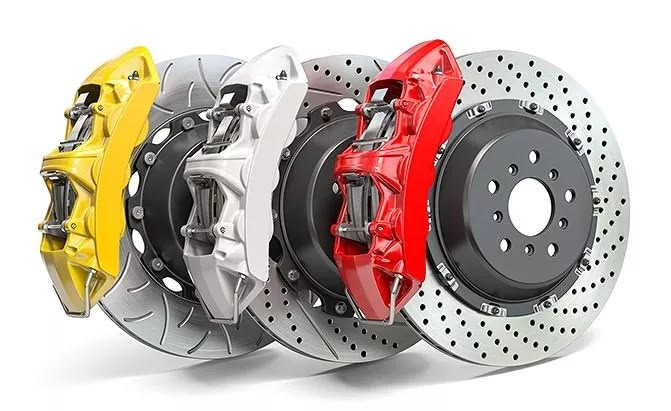
Before you look for the oem brake pads vs aftermarket, we need to differentiate between them, as they are not the same thing. A genuine brake pad might be manufactured by an independent company as a customized replacement for your car, bearing its name and specifications. A counterfeit, however, tries to appear as a genuine part when it is not.
This is where the real problem begins, because the external appearance alone doesn't reveal what's inside the box. Therefore, the first step isn't to judge based on the name or price, but rather to start with the details that reveal the true nature of the part, such as its serial number, specifications, and origin. This is precisely the point we will now explain in detail.
What details can reveal the truth about brake pads before buying them?
If you want to know the oem brake pads vs aftermarket, don't rely on the packaging. Turn the pad over and check the information on the metal part behind it, focusing on these signs:
- Make sure the brand or manufacturer's name is clearly visible on the pad.
- Check the part number on the pad and compare it to the number on the packaging.
- Confirm that the part number actually corresponds to a pad specifically designed for your vehicle by checking the manufacturer's manual.
- Be wary of any unexplained discrepancies between the pad's specifications and the packaging information.
- Don't assume the replacement pad's part number matches the OEM number exactly, as some companies use their own proprietary numbers. However, you should be able to match it to your vehicle or the correct OE number.
Even if all the information matches, there's still an important aspect to oem brake pads vs aftermarket: the condition of the pad itself. There might be signs here that the part numbers don't reveal.
What are the signs that should make you stop before installing brake pads?
Before installing brake pads, inspect the set. Understanding the oem brake pads vs aftermarket will help you spot the signs that warrant a second look. These include:
- visible cracks or crumbling of the friction material.
- a visible separation or gap between the friction material and the metal part behind the pad.
- an unexplained difference in thickness or finish between the pads.
- incomplete product information or information that doesn't match the manufacturer's manual.
- visible damage to the pad or the parts inside the set.
- and open or damaged packaging that makes you question the contents of the box.
If you don't find anything that makes you stop, the most important question is whether it's actually the right pad for your car, because the quality of the part is one thing, and its compatibility is another.
Why might the same car model have multiple brake pad part numbers?
You might search by car name and year and be surprised to find several brake pad part numbers, all seemingly for the same model. The reason is that some cars have different brake equipment depending on the trim level, engine, or braking system itself. Therefore, knowing the oem brake pads vs aftermarket isn't enough on its own, because even an original brake pad won't be the right choice if it's designed for a different system than your car.
To avoid relying solely on the model name, match the part number with your car's complete specifications and use the VIN (Vehicle Identification Number) when necessary, especially if multiple options appear. The goal isn't just to verify the authenticity of the pad, but to ensure that the original part is the correct one for your car.
Now that you've decided which brake pad is suitable for your car, the question that puzzles many arises: Is the most expensive one really the best?
Why is buying the right brake pads more important than buying the most expensive ones?
Many people, fearing poor-quality brake pads, follow a simple rule: buy the most expensive one. However, a higher price doesn't guarantee you've chosen the most suitable one for your car. The oem brake pads vs aftermarket isn't measured by how much you paid, but by the part's compatibility with the car, its manufacturing quality, and its source. You might find several options at different prices, all designed for the same car. Here, your decision shouldn't be based on the most expensive or cheapest, but on the part number, specifications, and actual compatibility. The right brake pad is the one that fits your car from the start, not the one with the highest price. This is what you'll find at frmlha, with guaranteed quality that allows you to choose with confidence from the beginning.
At frmlha, clear details and an easier choice.
When should you suspect that the brake pads you installed are of poor quality?
After installation, monitor your brake performance. The oem brake pads vs aftermarket can become more apparent with use. Some of the most important signs that warrant inspection include:
- a persistent squealing noise during braking.
- noticeable vibration during braking.
- a significant increase in stopping distance.
- a change in brake response with repeated use.
- a noticeable decrease in performance after the brakes overheat.
- and abnormal or rapid wear compared to normal use.
At this point, the question is no longer whether there is a problem, but rather where it originates: the pads themselves or the installation.
How to distinguish between a faulty brake pad and an incorrect installation?
If you hear noise or vibration after changing the brake pads, don't immediately assume the problem is with the pad quality, as the same symptoms can occur due to incorrect installation.
Therefore, start by checking the installation and ensuring the pad size is correct and that the brake discs and calipers are free of any obvious defects. If these things are fine and the symptoms persist, then you can begin to suspect the quality of the pads themselves and their source. If, after further investigation, you do suspect the pads and their source, then the question is no longer what caused the problem, but rather…
How should you act if you discover that the brake pads you installed are counterfeit or unreliable?
If you know the oem brake pads vs aftermarket and discover after installation that the pad is counterfeit or unreliable, do not continue using it. Have a mechanic inspect the brake system to ensure there are no other damages or problems.
- Replace the pad with a reliable one that matches your vehicle.
- Inspect the brake discs to ensure there is no visible wear or damage.
- Check the calipers and other brake components if you notice any noise, vibration, or change in response.
- After installing the new brake pads, test the brake response and watch for any abnormal noise or vibration.
conclusion
choosing brake pads isn't a decision you can simply validate after trying them out. Understanding theoem brake pads vs aftermarket is crucial from the outset, ensuring you find a part you know is suitable and reliable when you truly need to brake.
To avoid a cycle of comparison and testing from scratch every time, the source you choose makes a difference. Clear information and compatibility from the beginning saves you a lot of confusion. This is where frmlha helps you find the right pads for your car and choose with confidence from a trusted source.
Choose the right pads from frmlha and start every journey with confidence.