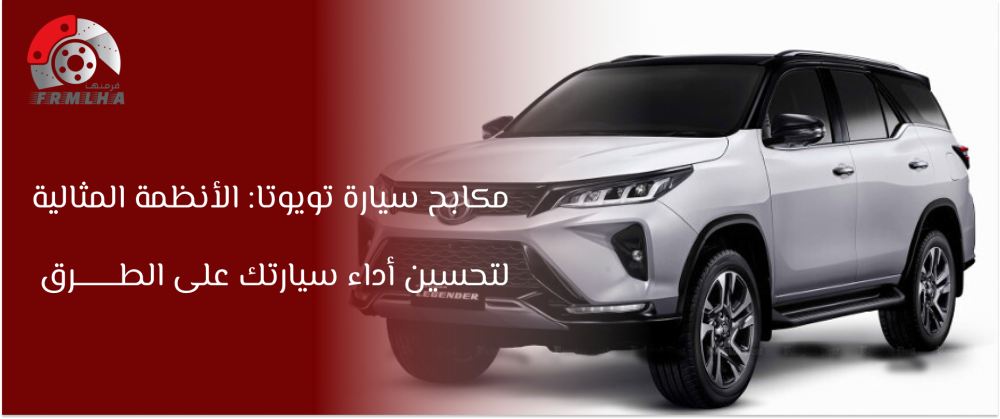

In the modern automotive world, engine power alone is no longer the true measure of a car's performance. The braking system is considered one of the most important safety features, and this is something Toyota prioritizes in every model it produces. A Toyota car is not just a technical component, but an integrated smart system that aims to ensure the highest levels of safety, stability and smooth performance.
The importance of the braking system in modern cars:
Brakes The most important element in preventing accidents, whether on highways or in cities, is the quick and precise braking response. This often determines whether a catastrophic accident occurs or is avoided.
While many equate performance with acceleration, the ability to stop safely and quickly is an integral part of a car's power. Toyota understands this well, and the braking systems in every Toyota vehicle are developed to seamlessly integrate with the chassis, engine, and drivetrain.
A look at the evolution of braking systems in Toyota cars:
- The simple beginning: Traditional brakes: Toyota's first cars relied on disc or drum brakes, which were common in the 1970s and 1980s.
- The introduction of modern technologies: Anti-lock Braking System (ABS): In the 1990s, Toyota introduced ABS systems to its cars, making stopping in slippery conditions safer.
- The move towards smart brakes and electronic control: Starting in the new millennium, most Toyota vehicles have been equipped with brakes that work with Electronic Brake-force Distribution (EBD) and Brake Assist (BA) systems.
Components of the braking system in a Toyota car:
- The pedal and hydraulic pipes: The Toyota relies on brakes with a hydraulic pressure system that transfers the driver's foot force to the brake discs.
- Discs and linings (discs and brakes): Toyota brake discs are distinguished by the quality of materials used, which prevent overheating and ensure consistent performance.
- Electronic sensors: Sensors play a key role in controlling wheel rotation speed, preventing skidding, and activating support systems such as ABS.
- Electronic Control Unit (ECU): This is the electronic brain responsible for balancing performance between the front and rear axles while stationary.
Modern braking systems in Toyota cars:
- ABS system: To prevent brake lock-up, it prevents the wheels from locking up when the brakes are suddenly applied, thus maintaining steering and control.
- EBD system: Brake force distribution works by distributing braking force between the rear and front axles according to the load, and is especially useful in transport vehicles such as the Hilux.
- BA system: Emergency braking support automatically increases brake pressure in emergencies, without driver intervention.
- The TRC and VSC systems: Stability and Traction Control help the driver maintain balance in turns or when accelerating on slippery roads.
- Automatic Emergency Braking (AEB): Found in advanced models such as the Camry and RAV4, it automatically activates the brakes when it senses an imminent danger.
The difference between genuine and aftermarket Toyota brakes:
- Quality and durability: Genuine Toyota brakes are made of materials that withstand high pressure and heat, ensuring a longer lifespan.
- Full compatibility with the vehicle system: The original brakes are designed to fit the design and programming of the Toyota vehicle without any modification.
- Safety: Aftermarket brakes may cause slippage or delayed response, while genuine ones ensure precise and safe performance.
Brake system maintenance in Toyota vehicles:
1. The importance of periodic inspection: It is recommended to check the brakes every 10,000 kilometers, or when any change in pedal response is felt.
2. Signs of brake failure:
- A squeaking or clicking sound when braking.
- Vibration in the steering wheel when pressing.
- A delayed response or a need for extreme pressure.
3. Brake fluid change: It should be changed every 2-3 years to ensure that the hydraulic pressure in the system is maintained.
How do brakes affect the everyday driving experience?
- Confidence on the road: With a reliable braking system, the driver feels secure in any sudden situation.
- Reduced stress in traffic: Easy pressing and response help the driver to commute more smoothly every day.
- Improved fuel economy: through advanced braking systems that reduce energy loss and support smart driving.
Rest assured that Toyota brakes are your true partner in safety, now available through Brake it for a safer driving experience.
Conclusion: When Toyota makes brakes, it makes confidence!
What makes Toyota brakes stand out is not just their advanced technology, but their design philosophy built on safety, sustainability, and confidence. From the moment you press the pedal until the car comes to a complete stop, dozens of intelligent systems work behind the scenes to protect you and give you an unparalleled driving experience. On every journey, on every road, rest assured that Toyota brakes are your true partner in safety.
Frequently asked questions:
When should brake pads be changed in Toyota cars?
It is recommended to change the brake pads every 30,000 to 50,000 kilometers, or when a squealing sound is heard or a weakness in response is noticed.
Are ABS and EBD systems present in all Toyota cars?
Most modern Toyota cars are equipped with ABS and EBD systems, especially higher-end models such as the Camry and RAV4, while they may be optional in some economy models.
What are the benefits of the Emergency Brake Support (BA) system in a Toyota car?
It automatically increases brake pressure in emergencies, reducing stopping distance and increasing driving safety.
Does brake quality affect fuel consumption?
Yes, good brakes reduce excessive friction and sudden stops, which improves driving efficiency and reduces fuel consumption.
What causes the steering wheel to vibrate when the brakes are pressed?
It may be due to damage to the brake discs, or an imbalance in the system, and it is advisable to have the system checked at an authorized center.