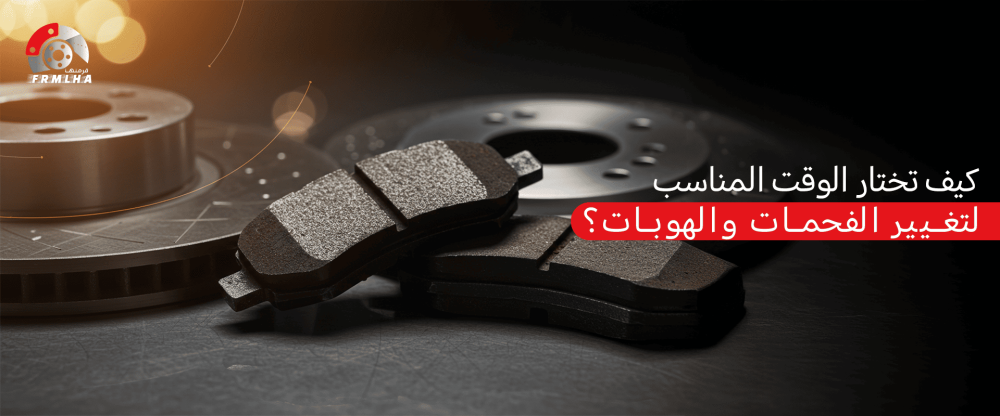
The braking system is one of the most important safety systems in a car, and brake pads and rotors are the essential components upon which the braking process depends. But a question that concerns many drivers is: When should brake pads and rotors be changed? And what are the signs that indicate they are worn?
In this article, we provide you with a comprehensive practical guide from three main pillars, which will help you make the right decision at the right time.
Why are brake pads and rotors vital components in the braking system?
Before we discuss when to change them, we must understand their importance and their essential role in the braking system.
- Brake pads: These are pieces made of friction materials that press against the brake discs (ropes) to generate friction that slows down the movement of the wheels.
- Brake discs: Metal discs that rotate with the wheels, and are pressed against by the brake pads when the brakes are used.
Each press of the brake pedal generates significant heat and friction between the brake pads and rotors, which over time leads to their wear. In hot climates like Saudi Arabia, or on congested roads, the rate of wear is faster due to the increased stress on the braking system.
The effect of not changing the brake pads and rotors:
- Poor brake performance, which increases stopping distance.
- Other system components such as the caliper or cylinder were damaged.
- High temperatures in the hubs can lead to their deformation.
- The possibility of losing control of the vehicle in emergency situations.
Therefore, attention to maintenance is essential to ensure safe driving and efficient braking.
When should brake pads and rotors be changed?
There is no one-size-fits-all solution, because the timing of change depends on:
- Driving style (sporty, calm, urban).
- The nature of the road (mountainous, fast, busy).
- The quality used.
- Car weight and daily load.
Signs that indicate it's time to change the brake pads:
- A squealing or metallic whistling sound when the brakes are applied.
- A noticeable decrease in braking power or a feeling that the brakes are "soft".
- The thickness of the carbon fibers has become thin (less than 3 mm).
- Brake warning on the dashboard (in modern cars).
Signs that indicate the brake rotors need to be changed or resurfaced:
- Vibration in the steering wheel or brake pedal when pressed.
- The hob surface is not smooth or has cracks and scratches.
- The hoops turned blue due to the high temperature.
- Hearing a rough metallic grinding sound even after changing the brake pads.
Average lifespan:
- The range of the coals: from 30,000 to 50,000 kilometers (less in harsh conditions).
- Hoops: from 60,000 to 100,000 kilometers or when worn or warped.
Important information: In many cases, it is advisable to change them together to ensure compatibility and avoid subsequent performance problems.
Ready to replace your brake pads and rotors? Save your time and effort with Farmlha – your first destination for genuine and certified brake parts, at competitive prices and with fast delivery service within Saudi Arabia.
Tips for choosing the ideal time to efficiently change brake pads and rotors:
To avoid unexpected problems with the braking system and to know when to shift, follow these tips:
1. Monitor your driving style: If you drive in continuous traffic or mountainous areas, the wear on brake pads and rotors will be faster than driving on highways.
2. Perform regular inspections: Don't wait for problems to appear. Check your brakes at least every 10,000 km, and ask a technician to measure the pad thickness and inspect the condition of the rotors.
3. Pay attention to noises: Any strange noise when pressing the brakes is a sign of a problem. Don't ignore it.
4. Do not postpone replacement when needed: delaying their replacement may lead to further damage and higher costs later.
5. Use genuine or high-quality parts: Cheap brake pads can cause the rotors to wear out quickly or lead to sudden brake failure.
6. Consult an expert: Relying on a professional technician will help you make the right decision regarding machining or replacement.
Conclusion:
Brake system maintenance begins with understanding the condition of the brake pads and rotors and making the right decisions at the right time. Don't wait until you hear a squeal or feel a vibration; perform regular inspections and replace parts when necessary.
Whether you're driving in a busy city or on a highway, make sure your brake pads and rotors are working properly, because ignoring them can be costly, not only financially, but could also put your life at risk.