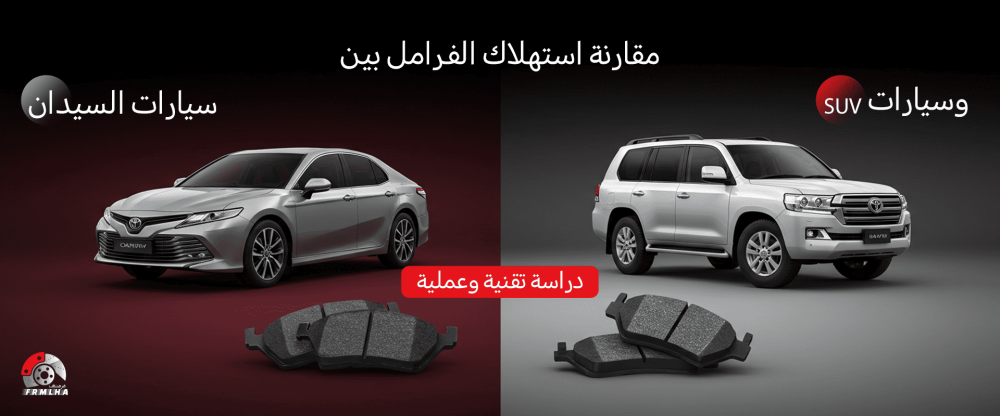
Despite this progress, brake wear remains a major challenge for drivers, as factors such as weight, vehicle design, driving style, and environment all influence how quickly brake discs and pads wear down. Comparing traditional sedans to SUVs reveals significant differences in brake wear, largely due to variations in weight, ground clearance, usage patterns, and tire size.
In this lengthy article, we will conduct a detailed study that clarifies the differences between sedans and SUVs in terms of brake consumption. We will analyze the technical, economic, and practical aspects, supported by examples and tips, to arrive at a comprehensive view that helps the driver understand how to extend the life of his braking system.
Factors affecting brake wear:
Brake wear is not simply a result of pressing the brake pedal; it is influenced by several interconnected factors, including vehicle characteristics, driving style, and road conditions. These factors can be divided into key categories:
1 - Car weight:
- Weight is the primary factor in determining brake wear.
- The heavier the car, the more energy is required to stop it, and therefore the greater the friction between the brake discs and linings, leading to faster wear.
- SUVs are typically much heavier than sedans, which makes their brakes more prone to rapid wear.
- Example: An SUV weighing 2200 kg compared to a sedan weighing 1600 kg, the SUV needs about 37% more braking force to stop from the same speed.
2 - Tire and wheel size:
- Larger tires increase the contact area with the road, which increases resistance to movement during braking.
- This means that cars with wider tires, such as SUVs, require more braking power compared to sedans that use smaller, lighter tires.
- The size of the tires also adds a load to the discs and bushings as a result of the increased torque required to stop the large wheels.
3 - Leadership style:
- Aggressive driving or sudden braking leads to a rapid increase in brake wear.
- Frequent braking over short distances increases heat, causing what is known as fade, i.e., a temporary loss of braking power.
- Smooth driving, relying on gradual braking and the use of engine braking, greatly reduces wear on the linings and discs.
4 - The nature of the roads and driving conditions:
- Driving in crowded cities with numerous traffic lights leads to frequent stops and starts, which increases brake wear.
- Mountain roads and long slopes put additional strain on the system due to the constant need for speed control.
- Rough or dusty roads affect the brakes, as fine gravel and dust can cause faster wear of the discs and pads.
5 - Temperature and heat rise resulting from braking:
- Every brake generates heat as a result of the friction between the discs and the linings.
- In heavy vehicles such as SUVs, the heat generated is much higher than in sedans, which can reduce braking efficiency and accelerate wear.
- Using high-quality brake pads reduces the effect of heat on the lifespan of the fabrics.
6 - Quality of brake parts:
- The quality of the discs and linings plays an important role in brake wear.
- Original or high-quality parts have a longer lifespan and balanced friction, while inferior parts wear out quickly and sometimes lead to disc damage.
7 - Overloads:
- Overloading the car increases the pressure on the brakes.
- SUVs, which are used to transport heavy loads, are more prone to wear and tear compared to sedans, which are usually intended for passengers only.
Technical comparison between sedans and SUVs in terms of brake consumption:
Sedan cars differ significantly from SUVs in their braking systems, and this difference directly affects brake wear, disc and pad lifespan, and braking temperature. This difference can be analyzed along several lines:
1 - Brake system design
The two gentlemen:
- It usually comes with disc brakes in the front, and may use drum brakes in the rear in economy models.
- Some mid-range and high-end models rely on discs on all four wheels to ensure better braking.
- The system design is often lightweight and suitable for the lighter weight of the vehicle.
SUV:
- It usually relies on large discs at the front and rear to counteract the car's large weight.
- Some sports models come with advanced braking systems such as Brembo or CERAMIC brakes to withstand high temperatures.
- The system is designed to be more robust and durable, but it consumes more fuel during normal city driving.
2 - Disc and lining size
The two gentlemen:
- The diameter of the disc is usually between 250 and 320 mm.
- The linings are thinner compared to SUVs, because the load on the system is lighter.
- The lifespan of discs is usually between 80,000 and 100,000 km, and for fabrics between 40,000 and 60,000 km.
SUV:
- The discs are much larger, often between 350-420 mm, to provide sufficient braking force for the greater weight.
- The linings are thicker but they wear out faster due to overload and high temperature.
- The lifespan of discs is generally between 60,000 and 80,000 km, and fabrics between 25,000 and 40,000 km in daily use.
3 - Heat and its effect on performance
The two gentlemen:
- The heat generated during braking is less due to the light weight and moderate speeds, which reduces the risk of fade (loss of brake effectiveness when the temperature rises).
- The driver can drive the car for long periods without significantly affecting the brake performance.
SUV:
- The heat is much higher due to the large weight and friction of the large discs against the linings.
- Fade may occur with continuous braking on mountain roads or long inclines, requiring the vehicle to stop for a short period to cool the discs.
4 - The force required for braking
The two gentlemen:
- Less force is required, making pressing the brake pedal less of a strain on the driver.
- This reduces wear and tear on the linings and discs over time.
SUV:
The required force is much higher, especially at high speeds or overloading, which leads to faster wear and tear on the fabrics.
5 - Lifespan and replacement cost
6 - Impact of chassis and frame design
The two gentlemen:
- Smaller tires and lighter weight reduce the load on the brakes.
- The low profile increases the stability of the car during braking, which reduces the stress on the system.
SUV:
- Larger tires and higher ground clearance increase the required braking torque.
- The higher weight of the vehicle and increased torque make the discs and bushings more prone to rapid wear.
Daily driving factors and their impact on brake wear:
The braking system is directly affected by the driver's daily habits and the environment in which they drive. Even if a car is equipped with the best braking systems, driving style and surrounding conditions are the primary factors determining the lifespan of the brake pads and discs.
1 - Driving in crowded cities
The two gentlemen:
- Designed for driving within cities, where the process of stopping and starting at traffic lights is frequent.
- Brake wear is present but moderate thanks to the car's lighter weight.
- Fabrics often last longer than SUVs under the same conditions.
SUV:
- Its brakes wear out more quickly due to the large weight and frequent pressure on the pedal.
- In busy cities, fabrics can wear out up to 25% faster than in sedans.
- The heat generated by repeated braking is higher, which reduces the lifespan of the discs.
2 - Driving on highways
The two gentlemen:
- Less brake consumption because the driver does not need to stop frequently.
- Brakes are often gradual at road entrances and exits.
SUV:
- At high speeds, you need a longer stopping distance due to the extra weight.
- Brakes exert more effort in emergency situations, which increases the likelihood of wear and tear during sudden use.
3 - Driving in mountainous areas and slopes
The two gentlemen:
- You need to use the brakes frequently when going downhill, but thanks to its lighter weight, the pressure is less.
- Driving intelligently using engine braking can significantly reduce consumption.
SUV:
- More prone to brake wear in these conditions due to the large weight.
- Long inclines cause the discs and linings to heat up quickly, which can cause brake fade.
- It is recommended to use engine braking continuously to reduce stress on the system.
4 - Off-Road Driving
The two gentlemen:
- They are rarely used on rough roads, so brake wear in these conditions is uncommon.
- When driving on dirt or slippery roads, dirt may get between the discs and linings and affect performance.
SUV:
- Primarily designed for off-road use, but this environment causes faster wear and tear due to dust, mud, and water.
- Dust and fine gravel can cause the discs to scratch and the linings to wear out quickly.
- The frequent need to control the car using the brakes increases the load on it.
5 - Driving with excessive loads
The two gentlemen:
- They are not often used to transport heavy weights, so the impact of the loads is limited.
- When overloaded (such as traveling with family and equipment), additional brake consumption may be observed, but not to a large extent.
SUV:
- They are often used to transport heavy weights or for towing, which doubles the pressure on the brakes.
- Overloading significantly raises the temperature of the discs, leading to rapid wear of the linings.
Regular brake maintenance:
Regular maintenance of the braking system is crucial for safety and extending a vehicle's lifespan. Brakes are not merely a means of stopping the vehicle; they are an integrated system whose efficiency must be continuously maintained. While the general principles of maintenance are the same, the differences between sedans and SUVs necessitate some specific requirements.
1 - Periodic inspection of linings (fabrics)
The two gentlemen:
- It is recommended to check the thickness of the linings every 10,000 km.
- It usually lasts for longer periods (40,000 – 60,000 km).
- The sound of whistling or a weak response can be monitored as early signs that a change is needed.
SUV:
- It is preferable to check the linings more frequently, every 7,000 – 8,000 km.
- The lifespan is shorter (25,000 – 40,000 km) due to the large weight.
- When driving in cities or mountain roads, you may need to shift more quickly.
2 - Checking and replacing the discs
The two gentlemen:
- The discs often last up to 80,000 – 100,000 km .
- You need to re-machin (level) or replace it if vibration appears in the pedal.
SUV:
- The lifespan is shorter (60,000 – 80,000 km).
- The discs are exposed to higher temperatures and crack faster, especially when used with heavy loads or on mountain roads.
- Early switching is preferable to frequent leveling to avoid performance loss.
3 - Changing the brake fluid
Sedans and SUVs together:
- The fluid should be changed approximately every two years or after traveling 40,000 km.
- Brake fluid absorbs moisture over time, reducing its effectiveness.
- In an SUV, it may lose its characteristics more quickly due to frequent overheating.
4 - Cleaning the brake system
The two gentlemen:
- It is sufficient to clean the fabrics and discs of dust during periodic inspection.
- This reduces unwanted noise and extends the lifespan of the parts.
SUV:
- You need a deeper cleaning, especially when driving on rough roads.
- Dust and mud can get trapped in the system and accelerate corrosion.
Real-world studies and experiments on brake wear:
A comparison between sedans and SUVs in terms of brake performance would be incomplete without referring to studies and field tests conducted by car manufacturers, specialized service centers, and research institutions in the field of vehicle engineering. These studies provide practical data that clearly demonstrates the differences.
1 - A study by Bosch – Germany
Practical tests have shown that SUVs wear out fabrics 30-40% faster than sedans when driving in cities.
- In a field test that included 100,000 km of mixed driving (cities + highways + mountain roads):
- The two sedans only needed to have their fabrics changed twice.
- The SUV needed to have its brake pads changed 4 times, and the discs replaced one additional time.
2 - Maintenance reports from Toyota Middle East Agency
Comparison between Toyota Camry (sedan) and Toyota Prado (SUV):
- Camry: The average fabric life was approximately 55,000 km before needing replacement.
- Prado: The average lifespan of the fabrics was only about 30,000-35,000 km.
- The main reason was the large weight of the SUV and its use for long-distance travel and carrying heavy loads.
3 - The experience of the United States Transportation Authority (NHTSA)
When testing a sudden stop from a speed of 100 km/h :
- The sedan required 7-10 meters less stopping distance compared to the SUV.
- Higher temperatures were recorded on the SUV's wheels after 5 repeated braking cycles, reaching 450 degrees Celsius compared to only 320 degrees Celsius in the sedan.
- High temperatures led to a faster loss of braking effectiveness in the SUV, confirming its rapid wear.
4 - Experiences of local maintenance workshops (Arabian Gulf)
- Workshops that deal with SUVs have noticed that owners of these vehicles change the brake pads two to three times more often than owners of sedans.
- In environments like the Gulf, where temperatures are high and roads are sometimes rough, brake wear in SUVs is faster due to dust and sand entering the braking system.
5 - Economic study (European car rental company)
The company noted that the cost of brake maintenance in an SUV over the vehicle's lifecycle (150,000 km) was 70-90% higher compared to a sedan.
The reason is:
- Increased consumption of fabrics and discs.
- The prices of spare parts for SUVs have increased.
- The need for more frequent maintenance.
Tips for drivers to extend brake life:
Brake wear is inevitable over time, but it can happen quickly or slowly depending on driving style and maintenance. There are a number of practical tips that can help extend the life of your brake pads and discs and reduce costs.
1 - Drive smoothly and avoid sudden braking
- Try to anticipate the traffic ahead to reduce the need for sudden braking.
- Sudden braking generates high heat, which leads to faster wear of the linings and discs.
- In the sedan: Progressive braking helps the fabrics to last up to 60,000 km.
- In an SUV: Smooth driving reduces fabric consumption by up to 20%.
2 - Using engine braking
- When descending slopes or reducing speed, shift to a lower gear to let the engine help reduce speed.
- This reduces the pressure on the brakes and prevents them from overheating.
- Very important in an SUV when driving on mountain roads or with heavy loads.
3 - Avoid overloading
- Overloading or towing trailers doubles the stress on the brakes and reduces their lifespan.
- In a sedan , overloading increases fabric consumption by a small percentage.
- In an SUV , overloading can wear out fabrics as quickly as half their normal lifespan.
4 - Periodic maintenance
- Check the thickness of the linings every 7,000 – 10,000 km.
- Change the brake fluid approximately every two years.
- Watch the discs for vibration or a squeaking sound in the pedal.
- Adherence to maintenance prevents bigger problems such as complete disk failure.
5 - Avoid continuous pressure on the pedal
- When driving downhill, do not press the pedal continuously.
- Use the "intermittent braking" technique (press lightly then release) to avoid overheating.
- This is especially important in SUVs because of their large weight.
6 - Maintaining the cleanliness of the brake system
- The accumulation of dust and dirt accelerates corrosion.
- In a sedan , it is sufficient to clean the discs during routine maintenance.
- In an SUV , especially when driving on rough roads, the system must be regularly cleaned of mud and sand.
7 - Choosing high-quality spare parts
- Poor quality fabrics may save initial costs but they wear out quickly and cause damage to the discs.
- In sedans, one can sometimes rely on average-quality alternatives.
- In an SUV , it is always advisable to use genuine or high-quality parts to ensure safety.
8 - Monitoring the car's indicators
- Pay attention to any brake warning lights on the dashboard.
- Listen for unnatural sounds such as squeaking or grinding.
- Observe the brake pedal response; if it becomes too soft or too hard, this is an indication of urgent maintenance.
Conclusion:
Sedans wear out their brakes more quickly and are cheaper to operate due to their lighter weight, while SUVs wear out their brakes faster and are more expensive due to their weight and loads. The choice depends on the intended use, but in all cases, regular maintenance and smooth driving remain essential for maintaining safety and extending the life of the vehicle.