
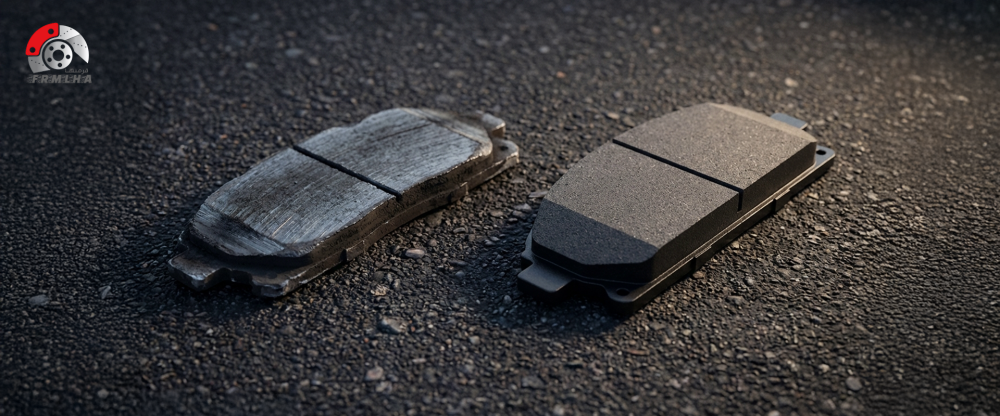

Brake pads are among the most important consumable parts in a car, as they are directly responsible for the braking process and safely stopping the vehicle. With frequent use, brake pads begin to wear out and become damaged, leading to weakened braking and increased stopping distance. If they are not replaced in a timely manner, this can even result in serious malfunctions.
In this article, we will learn in detail about the most important reasons for brake pad failure, how to avoid damaging them, and when they should be changed to maintain your safety and the safety of your car.
First: What are carbons and why are they important?
Brake pads are the pieces that press against the brake discs when the brake pedal is pressed, generating the frictional force that stops the car.
The better the brake pads are, the safer and smoother the braking process will be, and vice versa.
Second: The most important reasons for carbon brush failure
1. Extensive use of brakes
Constant and repeated pressure on the brakes, especially in cities and traffic jams, leads to very rapid wear of the brake pads .
Driving on busy roads, frequent stops, and many traffic lights are among the most common reasons that accelerate the wear of brake pads.
2. Incorrect driving style
Aggressive driving directly affects the lifespan of brake pads, for example:
- Sudden and forceful application of the brakes
- High speeds with sudden stops
- Descending from heights without using engine brakes
All these factors lead to the carbons overheating and wearing out quickly.
3. Poor quality of carbon brushes
Using cheap or counterfeit carbon brushes leads to:
- rapid erosion
- Poor braking efficiency
- Annoying noises
- Disc damage
Original or high-quality carbon fibers last longer and provide higher safety.
4. High brake temperature
When driving long distances with constant braking, the system temperature rises significantly, leading to:
- The carbons crumbled
- cracking
- Loss of effectiveness
This is known as Brake Fade or loss of brake efficiency due to heat.
5. Damaged brake discs (discs)
When discs are uneven or have deep scratches, it leads to:
- Uneven wear of the carbons
- Vibration during braking
- Reducing the lifespan of carbon brushes
Therefore, damaged discs are one of the main causes of carbon brush failure.
6. Entry of dust and sand
Driving on desert or dirt roads leads to dirt getting trapped between the brake pads and discs, causing:
- excessive friction
- faster erosion
- A squeaking sound
7. Failure to maintain the brake system
Neglecting regular maintenance leads to:
- dry skin
- The clipper is damaged
- Weak movement of the carbon brushes within their position
Therefore, the carbons erode abnormally.
8. Overloading the vehicle
The heavier the car, the more force the brakes need to stop, and this leads to:
- Higher pressure on the carbon brushes
- Higher temperature
- Faster consumption
9. Driving on mountain roads
Descending from a height using only the brakes, without using the engine brakes, leads to:
- Carbon fuel combustion
- Weak braking
- Premature carbon brush failure
10. Ignore the warning signs
like:
- Squeaking sound
- Vibration when braking
- Weak stopping power
- brake light
Ignoring these signs will lead to the complete destruction of the carbon brushes and possibly damage to other parts along with them.
Third: How can you preserve the carbon brushes for as long as possible?
- Drive slowly and avoid sudden braking.
- Use genuine or certified carbon brushes
- Check the brakes every 10,000 km
- Do not overload the car.
- Clean the brake system regularly.
Fourth: When should the brake pads be changed?
It is recommended to change the brake pads when:
- Fish reaching less than 3 mm
- Hearing a metallic grinding sound
- Noticeable weakness in braking
- After driving 30,000 – 50,000 km depending on usage
Summary
Brake pads are not just a simple part, but a fundamental element in car safety.
Understanding the causes of carbon brush failure helps you to:
- Avoid sudden breakdowns
- Reducing maintenance costs
- Keeping yourself and those with you safe
Paying attention to driving style, regular maintenance, and choosing the right brake pads is the best way to have strong, safe, and long-lasting brakes.